



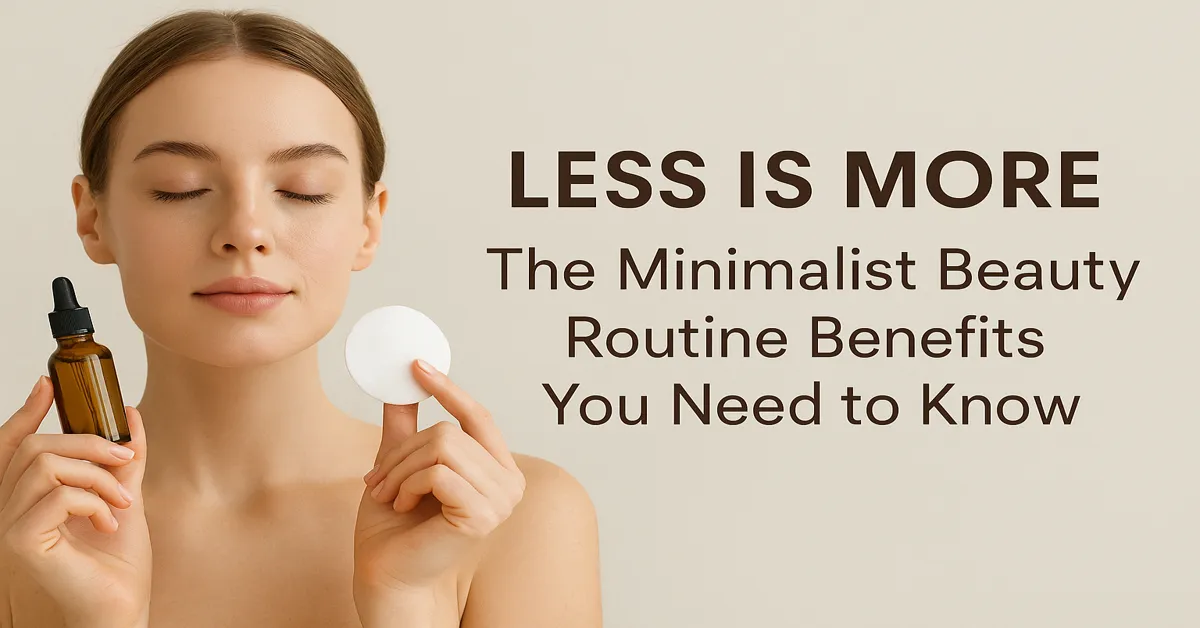

In a world saturated with ten-step skin care routines, dozens of serums, and constant product launches, a contrasting trend is quietly gaining traction: minimalist beauty routines. The idea is simple – paring down your routine to just the essentials, focusing on quality over quantity. The mantra “less is more” applies perfectly here: fewer products, fewer steps, but better results.
So why are more people adopting this pared‑back approach? What are the core benefits of a minimalist beauty routine – and how can you make it work for you? In this post, we’ll delve into the advantages, share tips on building your own minimalist routine, discuss potential caveats, and address frequently asked questions.
Whether you’re a skincare enthusiast or someone who just wants an easy, lasting routine, this guide will help you embrace simplicity without compromising results.
What Does a Minimalist Beauty Routine Mean?
Before we explore benefits, let’s define our terms clearly:
- A minimalist beauty routine strips away non-essentials, leaving only products that truly deliver results.
- It emphasises multifunctional or “multi‑purpose” products (e.g. a moisturizer that also gives antioxidant protection).
- It avoids layering many activities or constantly swapping in new products.
- It’s not about neglecting your skin, but about choosing carefully what you do use.
Dermatologists often caution that the skin can only absorb so much, and layering too many formulas can disrupt the skin barrier.
By simplifying, you reduce conflicts, avoid overuse, and allow your skin to breathe.
Top Benefits of a Minimalist Beauty Routine
Let’s deep dive into the key benefits you’ll gain if you switch to (or try) a minimalistic approach:
1. Less Risk of Irritation & Sensitivity
When you apply fewer products and fewer active ingredients, your skin is less exposed to conflicting formulas, harsh actives, fragrances, or potential allergens. Overloading skin with many actives may compromise the skin barrier, leading to dryness, inflammation, or breakouts. Lea Black Beauty+2HUM Nutrition+2
By simplifying, you let your skin’s resilience strengthen, reducing the risk of reactions.
2. Easier to Identify What Works
With fewer products in your routine, it becomes much easier to track what’s helping (or harming) your skin. If you use 10 different things every night, and a breakout appears, you have to guess which one caused it. But with a pared‑down routine, cause and effect become clearer.
Once you find your “holy grail” items, you can stick to them confidently.
3. Saves Time & Effort
Beauty routines can become a chore. Waking up early to layer five products, doing double cleansing, waiting between each serum — it all adds up. Minimalist routines are quicker, easier to maintain, and sustainable long-term. Many proponents claim you can get by with 3–5 minutes instead of 20–30.
When your routine is simple, consistency becomes your secret weapon.
4. Cost Effectiveness & Reduced Waste
Fewer products mean fewer purchases. Instead of chasing every new launch, you invest in a few high‑quality staples that you actually use. This reduces waste (half-used bottles) and saves money.
In addition, with fewer packaging materials, you’re more eco-conscious by default.
5. Encourages Sustainable & Conscious Beauty
Minimalist routines often align with sustainable values: brands with transparent ingredients, limited packaging, recyclable containers, and formulations that avoid unnecessary chemicals.
By buying less but better, you reduce your carbon footprint and support ethical beauty.
6. Better Skin Barrier Health
Too many products, especially potent actives layered haphazardly, can damage the skin barrier. A minimal routine gives the skin fewer challenges to cope with, allowing the barrier to repair itself and maintain balance.
A healthy barrier means better hydration retention, fewer irritations, and improved defence against external stressors.
7. Promotes Natural Radiance
When you eliminate coverups, heavy foundations, and too many “fix-it” products, your skin’s natural glow has a chance to shine. Many users report a fresher, more luminous complexion when they let their skin breathe and lean on fewer, better products.
Instead of hiding issues, you start treating them at their root.
How to Build Your Own Minimalist Beauty Routine
Switching to a minimalist approach doesn’t mean going bare. It means being intentional. Here’s a step-by-step guide:
Step 1: Understand Your Skin Type & Key Needs
Before choosing products, know whether your skin is dry, oily, combination, sensitive, or aging. Also, list your main concerns (e.g. pigmentation, acne, dehydration). This helps you pick only what you truly need.
Step 2: Choose Core Steps (Morning & Evening)
A minimalist routine typically has 3–5 core steps. Here’s a baseline:
Morning Routine (AM):
- Gentle Cleanser
- Antioxidant Serum (e.g. Vitamin C) — optional but often helpful
- Moisturizer
- Broad Spectrum Sunscreen
Evening Routine (PM):
- Cleanser (double cleanse if wearing makeup/sunscreen)
- Targeted Treatment (e.g. retinoid, gentle exfoliant) — optional
- Moisturizer
Derms often say you need just a cleanser, a moisturizer, and SPF for basics. HUM Nutrition
Step 3: Select Multi‑Purpose, High‑Quality Products
Look for formulations that do more than one job. For instance:
- A moisturizer with antioxidant properties
- Minimalist sunscreen that also hydrates
- A serum that addresses both brightening and barrier repair
Step 4: Introduce One New Product at a Time
If you’re switching from a heavy routine, start by removing products gradually. When you introduce a new product, wait a few weeks before adding another so you can track if your skin reacts.
Step 5: Be Flexible — Seasonal or Occasional Adjustments
Minimalist doesn’t have to be rigid. In dry winters or harsh climates, you may need an extra hydrating step. On the weekend, a mask may be fine – but don’t make it every day.
Step 6: Monitor & Adjust
Keep track of how your skin responds – hydration, breakouts, texture, radiance. If a product stops giving benefits or causes irritation, drop it. The fewer the variables, the clearer the feedback.
Real‑Life Minimalist Routine Examples
Here are two sample minimalist routines for different skin types:
| Skin Type | Morning Routine | Evening Routine |
|---|---|---|
| Normal / Combination | Cleanser → lightweight serum → moisturizer → SPF | Cleanser → targeted treatment (2–3×/week) → moisturizer |
| Dry / Dehydrated | Cream cleanser → hydrating serum (HA) → richer moisturizer → SPF | Oil/cream cleanser → hydrating serum or gentle retinoid → rich moisturizer |
Adjust as needed based on your skin’s response.
Common Misconceptions & Caveats
Even with its many merits, minimalist routines come with caveats to be aware of:
- “Minimalist” doesn’t mean “no activities.” You can still include powerful actives — just with care, fewer at a time.
- Your skin may “purge.” When cutting out many products, your skin may temporarily react or purge before stabilizing.
- Seasonal shifts may require more. Dry winters or sun damage phases may need extra steps (hydrating masks, boosters).
- Not all skin issues can be solved with minimalism alone. Some conditions (severe acne, rosacea, eczema) may need clinical treatments. Always consult a dermatologist for serious concerns.
FAQs
They include reduced skin irritation, easier tracking of product performance, time and cost savings, improved skin barrier health, sustainability, and better natural radiance.
No — if your core products are well-chosen and potent, they can deliver what your skin needs. The goal is effectiveness, not saturation.
Yes, if your skin doesn’t need them immediately. But many minimalist routines do include just one potent active. The trick is not layering multiple activities at once.
Give it at least 6–8 weeks. Skin cycles typically run ~28 days, and your barrier needs time to rebalance.
Yes — but more carefully. Use one targeted product at a time (e.g. niacinamide or azelaic acid) and monitor. Avoid over-layering.
Absolutely — you may need to adjust (e.g. richer moisturizer), but the underlying philosophy still applies: minimal and intentional steps.
Conclusion
The minimalist beauty routine benefits are more than just buzzwords. A simpler, more thoughtful approach to skincare can lead to healthier skin, increased clarity about what works, cost savings, and a more sustainable lifestyle. Instead of chasing every trend or layering endless actives, minimalism asks you to choose well — and let your skin do the rest.
If you’re tired of overwhelming routines or want a more sustainable, streamlined skincare life, try paring back to the essentials for a few weeks. Observe, adjust, and let your skin guide you – because often, less really is more.
Popular Search Term:
चेहरे पर चमक|पिंपल्स हटाने|मुहांसों से छुटकारा |गोरी त्वचा|बेदाग त्वचा |चेहरे की चमक |शादी से 2 दिन पहले पिंपल | फेस पैक |मेहंदी ग्लो फेस पैक | सफेद तिल का तेल vs काला तिल का तेल |हल्दी और बेसन का फेस पैक |Best Face Wash in India | Best Face Scrub in India| Best Face Toner in India| फेस जेल फायदे | पिंपल्स के लिए सबसे अच्छा फेस वाश|